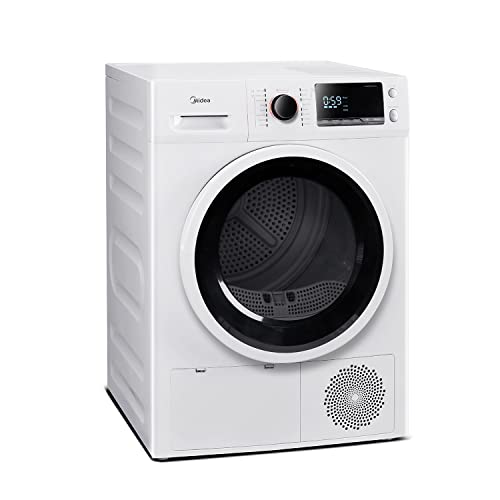
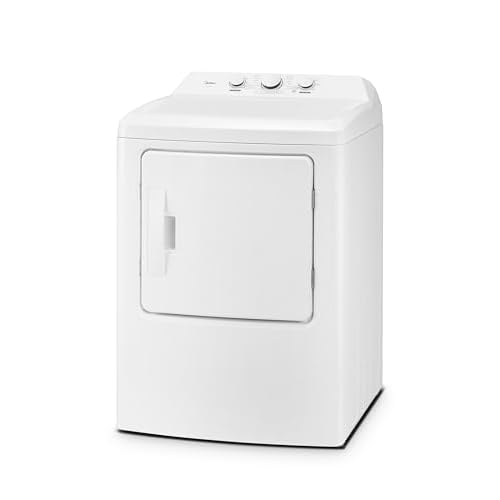
Start with the available installation
List the electrical supply, any existing exhaust route, drainage options and the space around the dryer. Compare those conditions with the installation manual for each candidate. An existing vented setup may change the cost of replacement, while a new location may favor a different arrangement. Do not assume the purchase price captures that difference. Request an installation estimate before making a technology-based decision or altering the laundry space. Include the work required to remove the old appliance and restore a usable room.
Keep fuel and model differences visible
Vented and heat pump are not the only distinctions in a dryer search. Midea documentation separates electric and gas models, including MLTE37N1BWW and MLTG37N1BWW. A gas model cannot be substituted for an electric model because a retailer places them together. The MLE25H7BWW is identified separately as a heat pump dryer. Compare exact models with their correct installation requirements, rather than copying features or connection details across a product family. Record the full model number next to every specification in your comparison.
Compare the jobs the dryer must complete
Look at bulky items, typical load size and how many loads you process consecutively. Ask for cycle information under comparable conditions; a quick-cycle figure for a small load does not settle the time required for towels. Review controls and accessible maintenance points as well as capacity. A drying approach that works for occasional loads may not fit a household that expects several baskets finished in a short weekend window. Choose a machine around those demanding regular loads, not an unusually easy demonstration load.
Use realistic ownership costs
Compare energy figures only when the measurement basis and usage assumptions align. Add installation, consumables where relevant, routine maintenance and potential service access costs. Avoid a guaranteed savings or payback claim based on a category label alone. Read both manuals to understand repeated cleaning tasks and choose the arrangement you can maintain consistently. The strongest purchase case combines a workable installation with a routine that suits the household, not an isolated efficiency headline. Local support should be part of that ownership calculation as well.
Check the details
Sources & scope
We use manufacturer information to describe stated features. It does not prove real-world performance or make every version equivalent. Confirm current US specifications and the exact bundle before buying.
- MLTE37N1BWW manufacturer documentation ↗
- MLTG37N1BWW manufacturer documentation ↗
- MLE25H7BWW manufacturer documentation ↗